

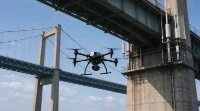



As industries increasingly demand real-time environmental awareness, a new generation of indirect time-of-flight (iToF) sensors is overcoming historical limitations to enable precise distance measurement and 3D imaging for high-speed applications. These advancements are reshaping automation, robotics, and interactive technologies by addressing critical challenges in dynamic environments, while quietly transforming sectors from manufacturing to healthcare.
Breaking Through Historical Barriers
Traditional iToF systems faced significant hurdles in practical deployments. Ambient light interference often distorted measurements in outdoor or brightly lit industrial settings, while limited dynamic range restricted their ability to track objects moving at varying speeds. Recent breakthroughs in computational imaging algorithms have mitigated these issues, enabling reliable operation under diverse lighting conditions-from dimly lit warehouses to sunlit construction sites. The integration of adaptive exposure control further allows sensors to maintain accuracy even when objects abruptly change velocity, a critical requirement for autonomous mobile robots navigating crowded facilities.
Transforming Industrial Ecosystems
In manufacturing, these sensors are becoming the cornerstone of "self-aware" production lines. Automated quality control systems now leverage millimeter-level depth accuracy to inspect components on conveyor belts moving at speeds exceeding 5 meters per second-detecting sub-millimeter defects in electronics assembly with 99.8% reliability. Collaborative robots equipped with iToF arrays demonstrate unprecedented spatial reasoning, safely manipulating fragile materials while dynamically adjusting grip strength based on real-time shape analysis.
Logistics networks are undergoing similar transformations. Smart warehouses employ 3D-sensing-enabled drones that map inventory stacks in real time, while autonomous forklifts utilize instant depth mapping to navigate narrow aisles with centimeter precision. Early adopters report 40% reductions in parcel-sorting errors and 25% faster loading cycles, significantly boosting throughput in e-commerce fulfillment centers.
Emerging Frontiers Beyond Industry
The healthcare sector is exploring groundbreaking applications, with surgical robots using iToF-assisted depth perception to enhance minimally invasive procedures. Prototype systems can track instrument movements within 0.1mm accuracy, providing surgeons with tactile-like feedback in endoscopic operations. Rehabilitation centers are piloting gesture-controlled therapy equipment that adapts to patients' mobility levels through real-time motion capture.
Urban infrastructure is benefiting through smart traffic management systems that analyze pedestrian and vehicle flows using 3D thermal maps, optimizing signal timings to reduce congestion by up to 30% in pilot cities. Environmental scientists have deployed ruggedized iToF modules in wildlife conservation projects, monitoring endangered species' movements through 3D terrain mapping in protected rainforests.
Market Dynamics and Sustainability Shift
The global 3D sensing market is projected to grow at 22% CAGR through 2030, driven by escalating demand in Asia-Pacific manufacturing hubs and North American smart city initiatives. Regulatory pressures are accelerating adoption, with new workplace safety mandates requiring real-time collision avoidance systems in industrial vehicles-a capability fundamentally enabled by iToF technology.
Sustainability considerations are reshaping design paradigms. Next-generation sensors now achieve 50% lower power consumption compared to 2020 models, supporting always-on monitoring in solar-powered agricultural robots. Manufacturers are prioritizing modular architectures to extend product lifecycles, aligning with circular economy principles.
The Road Ahead: From Sensing to Predicting
As edge computing converges with machine learning, iToF systems are evolving beyond static measurement tools. Experimental platforms now combine 3D depth data with predictive analytics, enabling autonomous drones to anticipate wind patterns during high-speed flight or robotic arms to preemptively adjust for material deformation in metalworking processes.
The emergence of 6G research is opening new frontiers, with iToF-embedded base stations potentially enabling centimeter-accurate device localization for ultra-reliable low-latency communications. Meanwhile, breakthroughs in single-photon detection hint at future applications in quantum-secured LiDAR networks.
From factory floors to operating rooms, these unassuming sensors are quietly powering a paradigm shift in how machines perceive and interact with the physical world-ushering in an era where real-time 3D environmental intelligence becomes the foundation for safer, smarter, and more sustainable automated systems.