




Introduction
In the world of electronics, efficiency and reliability are non-negotiable. Whether you're designing a cutting-edge switch-mode power supply or tackling electromagnetic interference (EMI) in a sensitive circuit, the right magnetic component can make or break your project. Among the various core materials available, iron powder cores stand out for their unique blend of performance, cost-effectiveness, and versatility. But what makes them the go-to choice for engineers worldwide? Let's dive into the science and applications of these unsung heroes of electronic design.

What Are Iron Powder Cores?
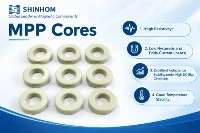
Iron powder cores are magnetic cores made from finely ground iron particles mixed with an insulating binder and compressed into shapes like toroids, E-cores, or cylinders. This structure gives them distinct advantages:
High Saturation Flux Density: They handle large currents without saturating, making them ideal for power applications.
Excellent Temperature Stability: They operate reliably across a wide temperature range (-65°C to +125°C).
Low Electromagnetic Radiation: Their toroidal design minimizes EMI, reducing the need for additional shielding.
Unlike ferrite cores, which require air gaps to prevent saturation, iron powder cores inherently distribute energy losses, avoiding localized heat and noise issues.
Why Iron Powder Cores Dominate High-Frequency Designs
As electronics push into higher frequencies, traditional materials like silicon steel struggle with core losses and efficiency drops. Here's where iron powder cores shine:
Superior High-Frequency Performance: With low hysteresis and eddy current losses, they excel in applications up to 100 kHz and beyond.
Noise Suppression: They absorb and suppress conductive EMI more effectively than laminated steel or ferrites, critical for compliance with EMC standards.
Cost-Effective Energy Storage: Their high saturation point allows compact designs for chokes and inductors in power factor correction (PFC) circuits.
*Did you know? In side-by-side tests, iron powder cores reduced noise by ~10 dB compared to alternatives.*
Key Applications in Modern Electronics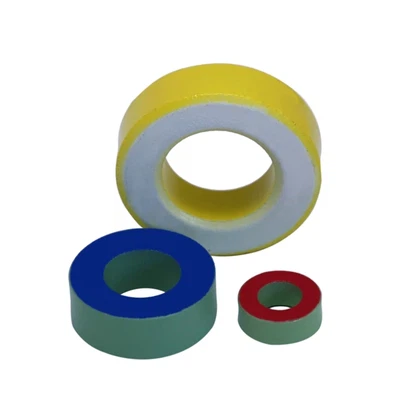
From consumer electronics to industrial systems, iron powder cores are the backbone of many critical circuits:
Switch-Mode Power Supplies (SMPS): Output chokes and flyback inductors benefit from their high energy storage and stability.
EMI Filters: They clamp down on noise in power lines, ensuring compliance with international EMC regulations.
PFC Chokes: Their linearity under high bias conditions improves efficiency in continuous-mode circuits.
Telecom and Automotive Systems: Reliable performance in harsh environments makes them a top choice for transformers and noise filters.
The Future: Iron Powder Cores in an AI-Driven World
As AI and IoT devices demand smarter power management, iron powder cores are evolving to meet new challenges:
Integration with Wide-Bandgap Semiconductors: They pair perfectly with GaN and SiC devices in high-density converters.
Sustainability: Recyclable materials and energy-efficient production align with global green initiatives.
Customization: Manufacturers like ShinHom offer tailored cores for unique voltage, current, or size requirements.
Why Choose ShinHom Iron Powder Cores?
At ShinHom, we don't just sell components-we solve problems. Our cores are engineered for real-world reliability:
Wide Product Range: Toroidal, E-type, and drum cores to fit any design.
Rigorous Testing: Every core meets ±10% tolerance for magnetic curves and ±15% for core losses.
Global Compliance: Certified for industrial, automotive, and consumer applications.
Ready to optimize your next design? Contact us at sales@shinhom.com for samples or technical support. Let's build the future, together.