





\In modern power supply designs, current measurement is no longer just about protection-it's about efficiency, stability, and long-term reliability.
Yet many designers still ask the same question during schematic review:
Which current sense magnetics actually fit my power supply design?
The answer depends on more than just current range. Understanding how current sense magnetics behave on a PCB-and how they interact with layout, frequency, and isolation requirements-often makes the difference between a clean design and weeks of debugging.

How Does a Current Sense Transformer Work on PCB?
A PCB mount current sense transformer measures current indirectly through magnetic coupling rather than direct electrical contact. When current flows through the primary conductor, it generates a magnetic field that induces a proportional signal in the secondary winding.
This approach provides two critical advantages for power supplies:
Galvanic isolation, protecting low-voltage control circuits
Low power loss, unlike resistive shunt solutions
On a PCB, this magnetic coupling allows designers to sense current accurately without inserting high-loss components into the power path-especially valuable in high-efficiency or high-current designs.
Why Current Sense Magnetics Matter in Power Supply Applications
Not all power supplies stress current sensing components in the same way. Switching frequency, load dynamics, and thermal conditions all influence how well a magnetic sensing solution performs.
Well-designed current sense magnetics help ensure:
Stable current feedback for control loops
Accurate overcurrent detection
Reduced noise sensitivity in high dV/dt environments
Ignoring these factors can lead to distorted feedback signals, unstable regulation, or nuisance fault triggering-problems that often appear late in the validation phase.
Key Factors When Selecting a PCB Mount Current Sense Transformer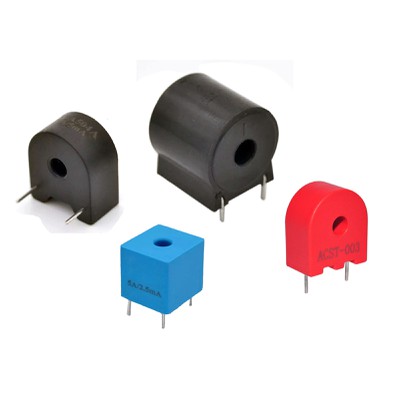
When evaluating a PCB mount current sense transformer, designers should look beyond nominal current ratings and focus on how the device integrates into the system.
Important considerations include:
Turns ratio and sensitivity matched to the control IC
Frequency response compatible with the switching topology
Isolation voltage meeting safety and regulatory requirements
Mechanical footprint suited for compact PCB layouts
A transformer optimized for power supply sensing is not just a passive component-it's part of the control system.
PCB Current Sensor Layout Tips That Actually Affect Accuracy
Even the right transformer can underperform if PCB layout is overlooked. In practice, many current sensing issues originate from layout decisions rather than component selection.
Effective PCB current sensor layout tips include:
Keeping primary current paths short and direct
Minimizing loop area to reduce magnetic interference
Placing sensing components away from noisy switching nodes
Ensuring consistent grounding for secondary-side circuitry
These layout details directly influence signal integrity, especially in high-frequency or high-current power designs.
Matching the Right Magnetic Solution to Your Design
So, which current sense magnetics fit your power supply design?
The best choice is one that balances electrical performance, mechanical integration, and long-term reliability under real operating conditions. Designers who consider magnetic behavior, PCB layout, and system interaction early in the design phase often avoid costly redesigns later.
At SHINHOM, we design PCB mount current sense transformers specifically for power supply applications, with controlled magnetic characteristics and formats optimized for efficient PCB integration. If you're evaluating options or refining an existing design, our engineering team can help you find the right solution for your application.