




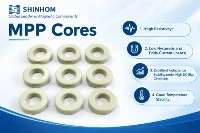
Did you know that electromagnetic interference (EMI) can cause anything from minor static in your headphones to critical failures in medical equipment? At the heart of solving these invisible issues lies a humble yet powerful component: the snap-on ferrite core.
These unobtrusive devices silently work to maintain the integrity of your electronic systems, and understanding how to select the right one is key to optimal performance. Let's explore how these cores work and what you need to know to choose the perfect solution for your application.
The Unseen Problem: Taming Electromagnetic Noise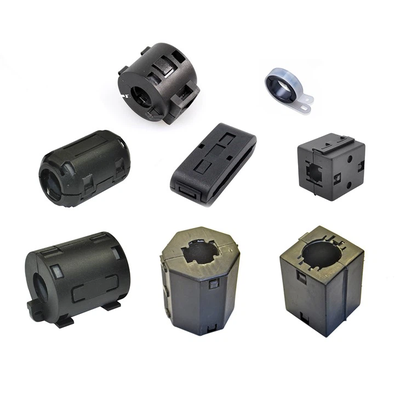
We live in an increasingly crowded electromagnetic environment. From smartphones to industrial machinery, every electronic device generates some form of interference that can affect other nearby equipment. This electromagnetic interference (EMI) isn't just an annoyance-it can result in data corruption, system malfunctions, and compliance failures with international regulations.
Snap-on ferrite cores serve as simple but effective filters that suppress these high-frequency noises. They work by dissipating unwanted RF energy as heat, allowing only the clean signals to pass through. Their unique snap-on design makes them instantly deployable on existing cables without requiring circuit modifications or special tools.
How Snap-On Ferrite Cores Actually Work
At their core, ferrite beads function on a straightforward principle: they're frequency-dependent resistors that become more resistive to higher-frequency signals. When you snap one around a cable, it forms a lossy inductor that absorbs and dissipates high-frequency electromagnetic energy traveling along the wire.
The effectiveness of a ferrite core is measured by its impedance, which is highest at its designed frequency range. For instance, our RIS series cores provide excellent suppression in the 25-100MHz range, perfect for many consumer electronics and industrial applications. The material composition-such as the 43-material used in Fair-Rite's snap cores-determines the frequency characteristics and effectiveness of the suppression.
Choosing the Right Core: A Practical Guide
Selecting the appropriate ferrite core isn't about finding a one-size-fits-all solution. It requires careful consideration of several factors:
Cable diameter compatibility: The inner diameter (dimension A in our RIS series) must match your cable size precisely for optimal performance
Frequency requirements: Different materials suppress noise most effectively at specific frequency ranges
Environmental conditions: Consider operating temperature ranges, especially for industrial or automotive applications
Physical constraints: Available space may determine whether you need a low-profile or standard-sized core
Our snap-on ferrite cores come in various configurations to meet these diverse needs. The RIS series offers cylindrical designs for general-purpose applications, while the SSH type provides flat, low-profile options where space is limited. For specialized applications, we offer the RU and FU types with specific impedance characteristics at critical frequency points.
Beyond the Basics: Advanced Applications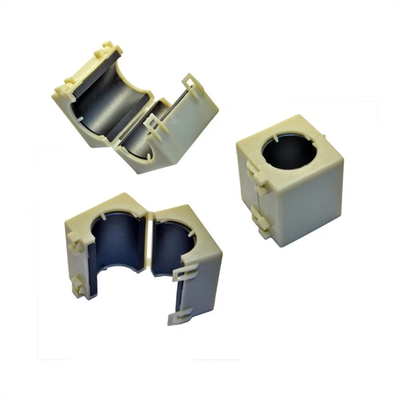
While many people associate ferrite cores with computer cables, their applications extend far beyond:
Medical equipment: Ensuring reliable operation of critical healthcare devices
Automotive systems: Protecting vehicle electronics from interference
Industrial automation: Maintaining signal integrity in manufacturing environments
Telecommunications: Preserving signal quality in communication infrastructure
The versatility of snap-on ferrites makes them invaluable across industries. For example, Laird Performance Materials offers specialized HF material cores providing 274 ohms impedance at 300MHz, ideal for high-frequency applications.
The Smart Designer's Choice
The beauty of snap-on ferrite cores lies in their simplicity and effectiveness. They represent one of the most cost-efficient solutions to complex electromagnetic compatibility problems. With the right core properly selected and installed, you can often avoid expensive redesigns or additional filtering components.
As electronic systems become more dense and interconnected, the strategic use of ferrite cores will only grow in importance. By understanding their characteristics and applications, you're better equipped to design robust, reliable systems that perform as intended-even in electromagnetically challenging environments.
Ready to solve your EMI challenges? Explore our complete range of snap-on ferrite core solutions. Contact our technical team at sales@shinhom.com for personalized recommendations based on your specific application requirements.