




For engineers sourcing millimeter-wave components, isolation (measured in dB) is a non-negotiable parameter-but blindly chasing higher numbers inflates costs without guaranteeing system reliability. At 40GHz, where signals face atmospheric attenuation, multipath interference, and thermal drift, Waveguide Isolator suppliers must balance isolation with context-specific tradeoffs. Here's why 18dB might be insufficient-or overkill-depending on your application.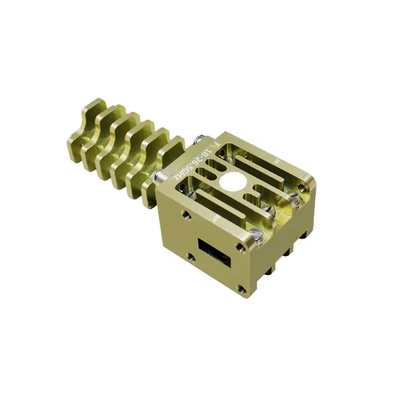
The 18dB Benchmark: When It Falls Short
While 18dB isolation meets basic industrial standards (e.g., -30°C to +70°C environments), it struggles in high-stakes scenarios:
5G/6G Base Stations: Reflected signals from antenna arrays demand ≥25dB isolation to prevent oscillator pulling and phase noise. UIY's 40GHz isolators achieve 25dB isolation at 7.9–8.4GHz, ensuring signal integrity in dense urban deployments.
Satellite & Radar Systems: Wide temperature swings (-45°C to +90°C) degrade ferrite performance. Here, 18dB can drop below 15dB, risking system failure. Suppliers like UMT guarantee 23dB isolation across -40°C to +85°C for aerospace-grade isolators.
High-Power Scenarios: Forward power exceeding 10W (e.g., RADITEK's 600W circulators) amplifies reflections. 18dB isolation absorbs only 98.4% of reflected energy-leaving sensitive amplifiers vulnerable.
Beyond Isolation: 3 Critical Supplier Selection Factors
Competent Waveguide Isolator suppliers optimize isolation alongside:
Insertion Loss & VSWR Synergy
Low insertion loss (≤0.3dB) ensures power efficiency, but without tight VSWR (≤1.22), impedance mismatches undermine isolation. Mi-Wave's U-band isolators (40–60GHz) pair 0.2dB loss with 1.15 VSWR for mmWave test systems.
Bandwidth vs. Isolation Tradeoffs
Ultra-wideband designs (e.g., 26.5–40GHz) often sacrifice isolation depth (e.g., 15dB) for frequency coverage2. For narrowband applications (e.g., 40.5–43.5GHz), custom suppliers like Shinhom deliver 18dB+ isolation within 3GHz bandwidth.
Thermal Stability
Ferrite materials dictate performance drift. Military-grade isolators (e.g., UIY's -40°C to +85°C range) use doped yttrium iron garnet (YIG) to maintain ±0.05dB isolation stability.
Application-Driven Isolation Requirements
| Application | Min. Isolation | Why 18dB Fails/Suffices | Supplier Example |
|---|---|---|---|
| Automotive Radar | 20dB | Multipath echoes overwhelm 18dB | Mi-Wave (23dB, 40–60GHz)8 |
| Lab Test Systems | 15dB | Controlled environments allow lower specs | SALUKI (15dB, 26.5–40GHz)2 |
| LEO Satellites | 25dB | Cosmic noise requires >98% reflection block | UMT (23dB+, custom)6 |
Choosing Waveguide Isolator suppliers: 4 Verification Steps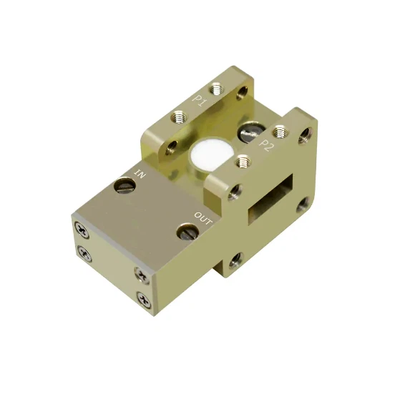
Request Temperature-Drift Data: Demand isolation plots across -40°C to +90°C (not just room-temperature specs).
Validate Bandwidth Claims: Ensure isolation is flat across your operational band (e.g., 39.5–40.5GHz vs. 26–40GHz).
Audit Ferrite Sourcing: YIG or lithium ferrites? The latter offers better thermal resilience for aerospace69.
Stress-Test Power Handling: Verify if "18dB isolation" holds at peak power (e.g., 100W continuous, not just average).
The Verdict
At 40GHz, 18dB isolation is a starting point-not a universal solution. For automotive or lab equipment, it may suffice; for phased-array radars or satellite payloads, it invites risk. Leading Waveguide Isolator suppliers like Shinhom engineer isolators holistically: pairing 18dB–25dB isolation with ultra-low loss, military-grade thermal stability, and customizable bandwidths to match your system's noise floor.