




As GNSS systems become essential in navigation, timing, and autonomous applications, signal reliability is facing unprecedented challenges.
From UAVs to critical infrastructure, engineers are increasingly dealing with one key problem:
GNSS signals are easy to disrupt-but difficult to protect without the right technology.
This article provides a deep technical comparison of GNSS interference types and anti-jamming technologies, helping engineers and procurement teams make informed decisions in 2026.
Understanding GNSS Interference: Why It Happens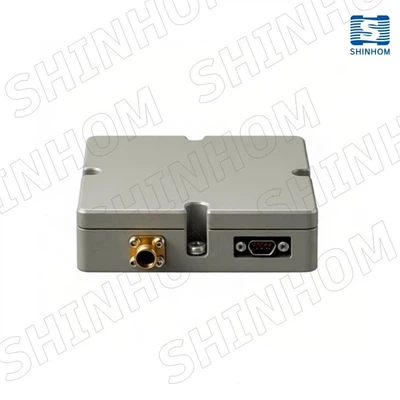
GNSS signals (such as GPS L1 or BDS B1) are extremely weak when received on Earth-typically below thermal noise levels.
This makes them highly vulnerable to interference.
Main Types of GNSS Interference
1. Unintentional Interference
Common in industrial and urban environments:
- RF emissions from communication equipment
- Power electronics noise
- Nearby wireless systems
👉 Often unpredictable and difficult to control
2. Intentional Jamming
Deliberate signal disruption using jammers:
- Low-cost GPS jammers (widely available)
- Military-grade interference systems
👉 Can completely block GNSS signals
3. GNSS Spoofing
More advanced and dangerous:
- Fake GNSS signals transmitted
- Receiver calculates incorrect position
👉 System appears "normal" but outputs false data
Impact of GNSS Interference on Systems
Interference doesn't just reduce accuracy-it can cause:
- Loss of positioning signal
- Navigation errors
- System instability
- Safety risks in autonomous systems
For applications like UAVs or defense systems:
- Even a few seconds of signal loss can be critical
Anti-Jamming Technologies: How They Work
Modern GNSS receivers use multiple layers of protection.
1. Frequency Filtering
Basic but essential:
- Removes out-of-band interference
- Improves signal-to-noise ratio
👉 First line of defense
2. Multi-Constellation Reception
Supports multiple systems:
- GPS
- BeiDou (BDS)
- GLONASS
- Galileo
👉 If one signal is jammed, others remain available
3. Adaptive Beamforming
Advanced antenna-level solution:
- Focuses on satellite signals
- Suppresses interference direction
👉 Widely used in high-end systems
4. Null Steering Technology
Creates "nulls" in interference direction:
- Cancels jamming signals
- Maintains GNSS signal reception
👉 Effective against strong jammers
5. Signal Processing & Algorithms
Modern receivers use:
- Adaptive filtering
- Interference detection
- Real-time signal reconstruction
👉 Core of next-generation anti-jamming
6. Software-Defined Radio (SDR)
Highly flexible architecture:
- Real-time signal analysis
- Dynamic response to interference
👉 Future trend for intelligent GNSS systems
GNSS Interference vs Anti-Jamming: Direct Comparison
| Aspect | GNSS Interference | Anti-Jamming Technology |
|---|---|---|
| Nature | External disruption | Internal protection mechanism |
| Types | Noise, jamming, spoofing | Filtering, beamforming, algorithms |
| Impact | Signal loss / false positioning | Signal recovery / stability |
| Control | Hard to prevent externally | Can be mitigated internally |
| Importance | Increasing globally | Essential for modern systems |
Engineering Trade-Offs: What Really Matters
When selecting anti-jamming solutions, engineers must balance:
Performance vs Complexity
- High-end systems → better protection but higher cost
- Integrated modules → easier deployment
Power Consumption vs Capability
- Advanced algorithms require more processing power
- Critical for UAV and portable devices
Size vs Functionality
- Compact modules → easier integration
- Larger systems → stronger anti-jamming capability
Real-World Application Requirements
UAV / Drone Systems
- Lightweight
- Low power consumption
- Strong anti-jamming
Military & Defense
- Maximum anti-interference capability
- Multi-layer protection
Industrial & Infrastructure
- Stable operation
- Cost-effective reliability
Integrated Solutions: The Industry Direction
In 2026, the industry is clearly moving toward:
Integrated GNSS Anti-Jamming Receivers
These solutions combine:
- Multi-system GNSS support
- Built-in anti-jamming algorithms
- Compact hardware design
SHINHOM Integrated Anti-Jamming Receiver: Bridging Performance and Integration
The solution offered on
Integrated GNSS Anti-Jamming Receiver
is designed to align with modern anti-interference requirements:
- Dual-system support (GPS L1 + BDS B1) → improved signal redundancy
- Integrated architecture → simplifies system design
- Low power consumption → ideal for embedded applications
- Compact size → supports space-constrained environments
- Robust anti-jamming capability → reliable in complex RF conditions
👉 A practical balance between performance, size, and cost
Conclusion: From Passive Reception to Intelligent Protection
GNSS technology is evolving:
- From simple signal reception
- To intelligent interference-resistant systems
For engineers and buyers, the key takeaway is:
Understanding interference is no longer optional-it is essential for system reliability.
Choosing the right anti-jamming technology means:
✔ Higher positioning accuracy
✔ Greater system stability
✔ Reduced operational risk