




As GNSS (Global Navigation Satellite System) becomes the backbone of modern navigation, communication, and timing systems, its vulnerability to interference is becoming a critical concern.
In 2026, engineers and system designers are no longer asking "Do we need anti-jamming?"
Instead, they are asking:
"How do we ensure positioning reliability under real-world interference conditions?"
Why GNSS Interference Is a Growing Risk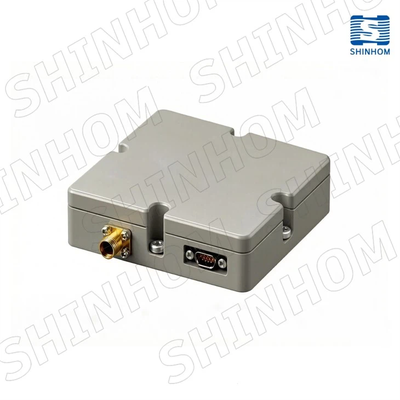
GNSS signals are extremely weak when they reach the Earth, making them highly susceptible to disruption-even from low-power interference sources.
Key risks include:
- Intentional jamming (military, illegal signal blockers)
- Unintentional interference (industrial equipment, RF noise)
- Spoofing attacks (false positioning signals)
Recent global data shows a sharp increase in GNSS interference incidents, especially in maritime, aviation, and defense sectors, highlighting the urgency of robust protection systems.
Market Trend: Anti-Jamming Is No Longer Military-Only
Traditionally dominated by defense applications, GNSS anti-jamming solutions are now rapidly expanding into commercial sectors.
Global market size exceeded $3.2 billion in 2026
Expected CAGR: 10%–13%+ through 2030+
Fastest growth areas:
- UAVs / drones
- Autonomous vehicles
- Smart infrastructure
👉 The shift is clear: civil systems now require military-level reliability
Key Technology Trends Engineers Must Understand
1. Multi-Constellation GNSS Reception
Modern receivers no longer rely on GPS only.
They integrate:
- GPS
- BeiDou (BDS)
- GLONASS
- Galileo
👉 This improves signal redundancy and resistance to interference
2. Adaptive Anti-Jamming Algorithms
Advanced receivers use:
- Beamforming
- Null-steering
- Signal filtering
These technologies dynamically suppress interference and maintain signal integrity.
3. Miniaturization & Integration
The biggest 2026 trend:
👉 Integrated anti-jamming receivers (all-in-one modules)
- Smaller size
- Lower power consumption
- Easier system integration
This is especially critical for:
- UAVs
- Portable systems
- Embedded devices
4. AI & Software-Defined Radio (SDR)
Next-generation systems are evolving toward:
- Real-time interference detection
- Intelligent signal classification
- Adaptive mitigation strategies
👉 Making receivers smarter-not just stronger
Engineering Challenge: Not All Anti-Jamming Receivers Are Equal
When selecting a GNSS anti-jamming receiver, engineers often face hidden pitfalls:
❌ Single-frequency limitation
- Lower robustness under interference
- Reduced accuracy
❌ Poor integration capability
- Complex system redesign
- Increased development time
❌ High power consumption
- Not suitable for portable or UAV applications
❌ Limited compatibility
- Cannot support multi-system GNSS
What Engineers Should Look for in 2026
To ensure reliable performance, a modern GNSS anti-jamming receiver should include:
✔ Multi-system compatibility
(GPS L1 + BDS B1 or more)
✔ Integrated design
- Reduces system complexity
- Saves PCB space
✔ Low power consumption
- Suitable for embedded and mobile systems
✔ Strong anti-interference capability
- Stable operation in RF-noisy environments
✔ Fast signal recovery
- Critical for real-time navigation systems
Application Scenarios Driving Demand
Today's anti-jamming GNSS receivers are widely used in:
- UAV / drone navigation
- Military and defense systems
- Maritime navigation
- Autonomous driving
- Surveying and mapping equipment
With the rise of autonomous systems, continuous positioning availability is becoming mission-critical.
SHINHOM Integrated GNSS Anti-Jamming Receiver: Designed for Real-World Challenges
Based on evolving industry needs, the
Integrated GNSS Anti-Jamming Receiver
is engineered to meet modern system requirements:
Integrated architecture → simplifies system design
Dual-system support (GPS + BDS) → enhanced positioning reliability
Low power consumption → ideal for embedded applications
Compact size → suitable for space-constrained devices
Robust anti-interference capability → stable performance in complex RF environments
👉 Designed for engineers who need reliability without complexity
Conclusion: Reliability Is the New Standard
As GNSS becomes mission-critical across industries, the expectation has shifted:
Positioning must work everywhere-even in hostile signal environments.
For engineers and procurement teams, the takeaway is clear:
✔ Choose integrated, multi-system solutions
✔ Prioritize anti-interference capability-not just accuracy
✔ Focus on real-world performance, not lab specs