



With the full-scale deployment of 5G and the accelerated advancement of 6G, the RF front-end is undergoing profound changes. Frequency bands are extending from Sub-6GHz to millimetre wave, and Carrier Aggregation (CA) is bundling multiple frequency bands together, while terminal devices continue to evolve towards thinner, lighter, and more highly integrated designs. This contradiction is directly transmitted to a key component of the RF front-end – the diplexer.
The diplexer is located at the antenna input/output, responsible for separating or combining transmit and receive signals of different frequency bands. In 5G/6G systems, it must not only handle higher frequencies but also perform more complex signal routing within a smaller space. Traditional cavity and discrete dielectric diplexers can no longer meet the requirements for size and integration. LTCC (Low Temperature Co-fired Ceramic) diplexers have emerged as a key component for RF front-end modular design.

Trend 1: Smaller Package Sizes to Suit High-Density Modules
5G smartphones need to support dozens of frequency bands. RF front-end modules integrate power amplifiers, filters, switches, duplexers, and other components, making PCB space extremely valuable.
Requirements for Diplexers
- Use SMD packaging to suit automated SMT production
- Minimise size while maintaining performance
- Support multi-band integration to reduce component count
Suitability of LTCC Technology
The LTCC process co-fires multiple layers of ceramic dielectric and conductor patterns into a single unit, forming a three-dimensional integrated structure. Compared with traditional discrete components, LTCC diplexers can achieve complete dual-band signal separation within a smaller package and support SMD mounting, making them suitable for high-density RF module layouts.
Trend 2: Lower Insertion Loss to Improve Signal Quality
Insertion loss directly consumes transmit power and affects receive sensitivity. 5G/6G place higher demands on signal quality, and any additional loss can affect the link budget and user experience.
Requirements for Diplexers
- Maintain extremely low insertion loss within the passband
- Maintain stable transmission characteristics across a wide frequency range
- Reduce power loss when signals pass through the diplexer
Suitability of LTCC Technology
- LTCC materials offer low dielectric loss characteristics
- Combined with optimised three-dimensional circuit design, they maintain low insertion loss while achieving miniaturisation
- SHINHOM LTCC diplexers are designed with low insertion loss as a core objective
- Ensuring efficient transmission of RF signals during dual-band separation and combinin
Trend 3: Higher Isolation to Support Carrier Aggregation
Carrier Aggregation (CA) bundles multiple frequency bands to increase data rates, but multiple bands operating simultaneously also bring new challenges: insufficient isolation between bands can cause intermodulation interference and affect communication quality.
Requirements for Diplexers
- Provide sufficient isolation between different frequency bands
- Suppress inter-band signal leakage and intermodulation products
- Ensure isolation between transmit and receive channels
Suitability of LTCC Technology
LTCC diplexers achieve spatial separation and electromagnetic shielding of different frequency band paths through a multi-layer ceramic structure, effectively improving inter-band isolation. SHINHOM LTCC diplexers support dual-band signal separation and combining, making them suitable for multi-band signal management in CA circuits.
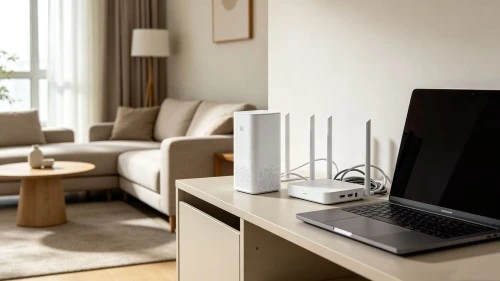
LTCC Technology: The Balance Between Miniaturisation and High Performance
Low Temperature Co-fired Ceramic (LTCC) technology has become the mainstream choice for RF front-end miniaturisation because it simultaneously solves three key issues:
| Technical Feature | Value for Diplexers |
|---|---|
| Multi-layer co-fired structure | Three-dimensional integration, significantly smaller than discrete solutions |
| Low dielectric loss materials | Maintains low insertion loss, improving signal quality |
| High-precision conductor patterns | Enables precise frequency selection and isolation design |
| SMD package compatibility | Suitable for automated placement, supporting modular production |
| Material stability | Maintains consistent performance across different temperatures and frequencies |
LTCC diplexers compress the functionality of traditional cavity or dielectric diplexers into a single SMD component, providing a viable technical path for the miniaturisation and integration of RF front-end modules.
Conclusion: Finding the Right Diplexer Solution for Your RF Front-End Module
5G/6G communication is driving the RF front-end towards higher frequency, miniaturisation, and modularisation. As a key component in this evolution, LTCC diplexers respond to these trends with miniaturised packaging, low insertion loss, and high isolation. SHINHOM offers LTCC diplexer products with multiple frequency types and package structures, and can provide selection recommendations based on your module design.
If you are developing a next-generation RF front-end module, or need a customised diplexer solution for a specific frequency band and package size, please contact our technical team. Provide your application frequency band, insertion loss requirements, and package size constraints. We will recommend a suitable product or develop a customised solution for you.
📧 Email: sales@shinhom.com
🌐 Website: www.shinhom.com/
🔗 Product Details & Inquiries: LTCC Diplexer