




Overcoming interference and signal loss challenges in modern RF design requires innovative filtering solutions.
The exponential growth of wireless technologies-from 5G deployments and Wi-Fi 6/6E adoption to IoT proliferation and satellite communications-is placing unprecedented demands on RF front-end designs. SAW filters, particularly advanced versions like IHP-SAW, are rising to meet these challenges, enabling engineers to achieve higher performance in increasingly compact form factors.
The IHP-SAW Technology Breakthrough
IHP-SAW (Incredible High-Performance Surface Acoustic Wave) technology represents a significant leap forward in RF filtering. Unlike traditional SAW filters, which face limitations at higher frequencies, IHP-SAW incorporates innovative structures that confine acoustic energy more effectively at the substrate surface.
This technology delivers three paramount advantages that make it indispensable for modern wireless applications:
High Q Factor: IHP-SAW achieves Q factor values exceeding 3000 at 1.9GHz, a substantial improvement over traditional SAW filters that typically achieve around 1000. This high Q factor translates to better signal selectivity and reduced energy loss.
Exceptional Thermal Stability: With frequency temperature coefficient (TCF) performance of ±8 ppm/°C or better-compared to -40 ppm/°C for conventional SAW filters-IHP-SAW maintains stable performance across extreme temperature variations from -35°C to +85°C.
Enhanced Power Handling: The improved thermal dissipation characteristics of IHP-SAW structures reduce temperature rise during operation by nearly half compared to traditional designs, significantly improving reliability under high-power conditions.
RF Front-End Integration Challenges and Solutions
Modern RF front-end modules must accommodate more frequency bands while shrinking in physical size. The integration of SAW filters into these modules has become increasingly complex with the transition to 5G and Wi-Fi 6.
Key integration considerations include:
Impedance Matching: Ensuring minimal reflection and maximum power transfer
Space Optimization: Implementing filters in increasingly compact footprints
Thermal Management: Dissipating heat effectively in densely populated boards
Interference Rejection: Mitigating adjacent channel interference in crowded spectra
Advanced SAW filters address these challenges through innovative packaging and architectural improvements. The emergence of 1.1×0.9mm packages enables designers to maintain performance while drastically reducing footprint requirements
POI Substrate Technology: Enhancing Performance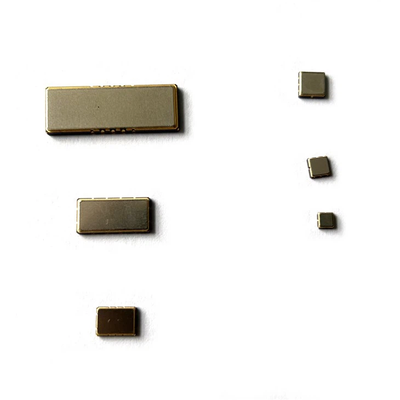
The substrate material plays a critical role in SAW filter performance. Piezoelectric-on-Insulator (POI) substrates have emerged as a game-changing innovation, particularly for high-frequency applications.
POI substrates enable:
Superior power durability through improved thermal dissipation
Enhanced quality factors leading to lower insertion loss
Better frequency temperature stability compared to conventional substrates
Improved suppression of transverse modes that can cause unwanted spurious responses
These characteristics make POI-based SAW filters particularly valuable for 5G infrastructure, automotive communications, and high-reliability industrial applications where performance under varying environmental conditions is paramount.
Addressing Interference Challenges in Crowded Spectra
The proliferation of wireless devices has created an increasingly crowded RF environment, making interference rejection capabilities more critical than ever. Modern SAW filters must provide steep roll-off characteristics and excellent out-of-band rejection to maintain signal integrity.
Techniques for enhancing interference rejection include:
Longitudinal Coupled Resonator (LCR) designs that achieve superior rejection characteristics
Reflector grating structures that reduce passband ripple and insertion loss
Multi-track configurations that enhance selectivity without increasing footprint
Research has demonstrated that optimized SAW designs can achieve remarkable rejection characteristics, with some implementations showing up to 80dB rejection in stopbands while maintaining low insertion loss below 1.5dB.
Wi-Fi 6 Design Considerations for SAW Filters
The transition to Wi-Fi 6 (802.11ax) brings specific challenges that demand advanced SAW solutions:
Frequency Coverage:
Wi-Fi 6 operates across 2.4GHz, 5GHz, and 6GHz bands (for Wi-Fi 6E), requiring filters that can handle multiple frequency ranges with consistent performance.
Key Requirements:
Low insertion loss (<2dB) to maximize data throughput
High selectivity to accommodate dense antenna configurations
Excellent thermal stability for reliable operation in various environments
Compact form factors to fit space-constrained access points and client devices
Advanced TC-SAW and IHP-SAW filters meet these demands by offering precise frequency control, minimal signal degradation, and outstanding interference rejection in the critical Wi-Fi bands.
The Miniaturization Challenge: Small Size, Big Performance
The relentless drive toward smaller consumer devices has pushed SAW filter packaging to increasingly compact dimensions. The 1.1×0.9mm package has emerged as a industry standard for space-constrained applications while maintaining excellent electrical characteristics.
Despite their small size, these filters deliver:
Operating frequencies up to 3GHz and beyond
Temperature stability suitable for automotive and industrial applications
Low insertion loss comparable to larger components
High reliability under mechanical stress
Pushing Frequency Boundaries: SAW Filters at 3GHz and Beyond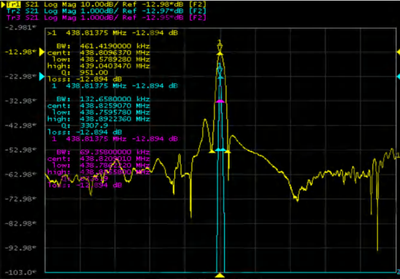
Traditional SAW filters faced limitations at frequencies above 2.5GHz, but advanced technologies like IHP-SAW have effectively extended this boundary. Modern SAW filters now demonstrate excellent performance at 3GHz and beyond, opening new possibilities for 5G applications.
This frequency extension enables:
Improved performance in 5G n77/n78/n79 bands
Enhanced compatibility with Wi-Fi 6E systems
Reduced component count through filter consolidation
Simplified RF front-end architectures
Techniques for Reducing Insertion Loss
Insertion loss remains a critical parameter in RF filter design, directly impacting system performance and power efficiency. Several innovative approaches have emerged to minimize insertion loss in SAW filters:
Electrode Optimization:
Appropriate metal thickness and duty ratio adjustments
Reflector grating structures that reduce peak in-band loss
Advanced electrode materials with better acoustic properties
Structural Innovations:
Multi-track designs that distribute acoustic energy more efficiently
Improved substrate materials with better piezoelectric coupling
Temperature compensation techniques that stabilize performance
Research demonstrates that optimized SAW designs can achieve insertion loss as low as 0.5dB at 2.5GHz, representing a significant advancement over conventional approaches.
TC-SAW Specifications for Demanding Applications
Temperature-Compensated SAW (TC-SAW) filters have become essential for applications requiring stable performance across temperature variations. These filters incorporate special layers that counteract the natural temperature drift of piezoelectric materials.
Key specifications for modern TC-SAW filters include:
Frequency range: 500MHz to 2.5GHz+
Bandwidth: 5MHz to 25MHz
Temperature coefficient: ±8 ppm/°C or better
Operating temperature range: -40°C to +125°C
Package sizes: From 1.1×0.9mm to 3.0×3.0mm
These characteristics make TC-SAW filters ideal for automotive systems, industrial IoT devices, and outdoor infrastructure where environmental conditions can vary significantly.
5G Frequency Bands and SAW Filter Requirements
The 5G ecosystem encompasses a complex array of frequency bands, each presenting unique challenges for filter designers:
Sub-6GHz Bands:
n77/n78/n79 (3.3-4.9GHz): Require high-frequency operation with low insertion loss
n41 (2.5GHz): Demand high power handling capabilities
n1/n3/n7/n28 (700-2200MHz): Need excellent selectivity to avoid interference with existing services
SAW filters for these applications must deliver:
High selectivity to prevent interference between adjacent bands
Low insertion loss to maximize battery life in mobile devices
Excellent power handling for infrastructure applications
Compact form factors to fit limited board space
Shinhom's Advanced SAW Filter Solutions
At Shinhom, we've leveraged these technological advancements to develop a comprehensive portfolio of SAW filters that address the exacting requirements of modern wireless systems.
Our product development focuses on:
IHP-SAW-based filters for superior high-frequency performance
POI substrate technology for enhanced thermal stability
Advanced packaging solutions for space-constrained applications
Custom design capabilities for unique application requirements
Whether you're developing 5G handsets, Wi-Fi 6/6E access points, industrial IoT devices, or automotive communication systems, our technical team can provide optimized filtering solutions that balance performance, size, and cost considerations.
Experience the difference that advanced SAW technology can make in your designs. Contact our engineering team at sales@shinhom.com.cn to discuss your specific requirements and request samples of our latest SAW filter products.
Shinhom Electronics - Your Partner in RF Innovation