

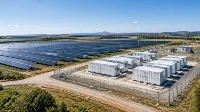



In recent years, the long-standing vision of a digitally connected power grid has begun to take shape in earnest. What was once a network designed for one-way energy flow is rapidly evolving into a smart, responsive system powered by real-time data and sensor-based intelligence. This shift is driven by the need to integrate renewable energy, improve grid reliability, optimize energy distribution, and support complex applications like microgrids and electric vehicle charging infrastructure.
Connected sensors - devices that continuously measure voltage, current, frequency, temperature, and other electrical parameters - are at the heart of this transformation. By providing real-time visibility into system behavior, these sensors enable utilities and energy operators to make data-informed decisions that enhance performance and minimize downtime.

Why Visibility is Critical in Modern Power Networks
Traditional grid operation relied heavily on scheduled checks and static protection schemes. However, with the increasing deployment of distributed energy resources (DERs), energy storage systems, and intermittent generation such as solar and wind, the need for continuous, high-resolution monitoring has never been greater.
Connected sensors capture and transmit critical data from various points across the grid - from transmission substations to distribution transformers and end-user facilities. This continuous data stream allows operators to:
Detect anomalies such as voltage sags, frequency deviations, or phase imbalances
Predict equipment failures before they disrupt service
Optimize load balancing and demand response
Integrate renewable and distributed resources without destabilizing the network
Without accurate sensor data, grid operators are forced to react rather than anticipate - a costly limitation in a system where millions of end-points interact dynamically.
Voltage and Current Monitoring: The Foundation of Smart Grids
Among the various measurement needs in a modern grid, voltage and current sensing stand out as foundational. These parameters influence everything from power quality and load sharing to protective relay operation and energy accounting.
Accurate voltage measurement helps identify:
Over/under voltage conditions that could damage equipment
Power quality disturbances that affect sensitive industrial loads
Phase balance issues that indicate asymmetrical loading or faults
Similarly, precise current monitoring enables:
Detection of abnormal draw patterns
Early fault isolation to prevent cascading outages
Better understanding of system loading in real time
When these measurements are combined with analytics and automation platforms, operators gain a comprehensive understanding of grid health and behavior - a critical capability in high-demand, distributed systems.
Sensor Challenges in a Noisy Electrical Environment
Grid sensing is not without its challenges. Modern power systems are electrically noisy environments, with harmonics, transients, and switching events introducing measurement complexities. For sensor technologies to remain effective, they must:
Maintain electrical isolation to protect control circuits
Minimize noise influence on measurement accuracy
Provide stable output over wide temperature and load ranges
Communicate reliably within the grid's communication infrastructure
These demands place a premium on sensor design quality, calibration stability, and component reliability.
What This Means for Electronics and Component Manufacturers
For component manufacturers and system designers, the rise of connected sensor applications transforms the role of foundational electronics. No longer are sensing elements peripheral add-ons - they are now central to system performance and reliability.
Key requirements include:
Precision voltage and current transducers that isolate and scale high-energy signals into safe, usable data for control hardware
Low-noise signal conditioning to ensure data integrity
Reliable passive components that enable consistent measurement over long service lifetimes
Form factors compatible with distributed installation on poles, substations, and remote sites
This shift means that suppliers must not only deliver components with strong electrical performance, but also ensure they support system-level resilience in the face of electrical noise and environmental stressors.
SHINHOM's Role in Supporting Smart Grid Monitoring
At SHINHOM, we understand the growing importance of connected sensing in modern power networks. Our portfolio includes precision voltage transducers, current sensors, and related monitoring components engineered to meet the complex needs of intelligent grid systems:
High accuracy and stability for reliable measurement
Galvanic isolation to protect downstream electronics
Robust performance under wide environmental conditions
Compatibility with industrial monitoring systems
Whether in utility substations, distributed energy installations, or industrial power distribution systems, SHINHOM monitoring solutions help ensure that critical electrical parameters are measured consistently and accurately - enabling better decisions, faster responses, and smoother operation.
To explore our range of sensors and measurement solutions designed for modern grid applications, visit:
👉 https://www.shinhom.com/sensor/residual-current-sensor.html
Looking Forward
The smart grid revolution demands more than software and networking - it requires precise, resilient, and intelligent sensing hardware that can provide a foundation for automation, stability, and scalability. As sensor networks become more pervasive and data-driven insights shape grid operations, SHINHOM remains committed to supplying the monitoring components that help power systems perform with confidence.
For inquiries or application support, contact us at sales@shinhom.com