





In many high-voltage electronic systems, performance doesn't fail loudly - it fails quietly. A delayed flash, an unstable ignition pulse, or inconsistent triggering can often be traced back to a small but critical component: the trigger coil.
Despite their compact size, trigger coils play a decisive role in applications where precise high-voltage pulses are required. From photoflash circuits to ignition systems, understanding how trigger coils work - and how to choose the right one - can make the difference between a robust design and an unreliable one.
What Is a Trigger Coil and Why Does It Matter?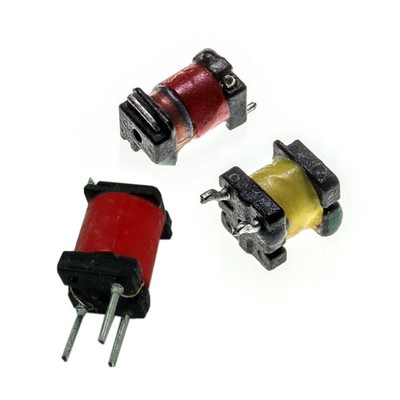
A trigger coil is a specialized transformer designed to generate a short-duration, high-voltage pulse from a relatively low input voltage. Unlike power transformers that operate continuously, trigger coils are optimized for fast response, high voltage step-up, and pulse stability.
They are commonly used in:
Photoflash and strobe lighting systems
Ignition circuits
High-voltage discharge applications
Pulse-triggered electronic modules
In these systems, the trigger coil's job is not just to boost voltage - it must do so cleanly, repeatably, and without waveform distortion.
Common Design Challenges Engineers Face
When engineers search for trigger coils, they're usually trying to solve one of these problems:
Inconsistent triggering voltage
Waveform deformation at high voltage
Excessive resistance causing energy loss
Poor isolation leading to reliability issues
These challenges are especially critical in photoflash applications, where the output pulse must reliably reach several kilovolts in a very short time window.
Key Electrical Characteristics That Actually Matter
While datasheets list many parameters, a few specifications have a direct impact on real-world performance:
1. Turns Ratio and Output Voltage Stability
A well-designed trigger coil maintains a consistent turns ratio, ensuring predictable output voltage under load. For example, generating ~4.4kV from a 230V input requires tight control over winding structure and insulation.
2. Low DC Resistance (DCR)
Lower DCR in both primary and secondary windings minimizes energy loss and improves pulse efficiency, especially during rapid triggering cycles.
3. Inductance Matching for Pulse Response
Proper primary and secondary inductance values help shape the trigger waveform, avoiding abnormal spikes or incomplete discharge events.
4. Insulation and Waveform Integrity
High-voltage operation demands excellent insulation performance to maintain clean waveforms and prevent partial discharge over time.
Why Trigger Coil Quality Is Often Overlooked
In many designs, trigger coils are treated as "standard" components - sourced late in the design cycle or replaced with lower-cost alternatives. However, engineers often discover that small variations in coil construction can lead to noticeable differences in system reliability.
This is especially true in compact designs where space, heat, and electrical stress are tightly constrained.
Where Shinhom Trigger Coils Fit In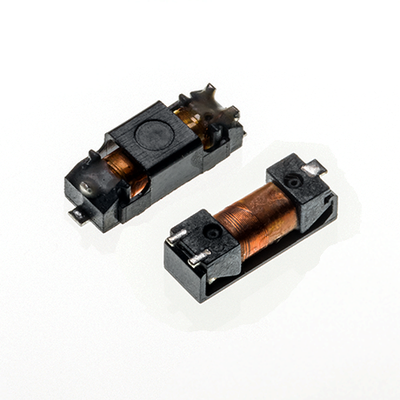
At Shinhom, our trigger coils are developed specifically for high-voltage pulse applications, with a focus on:
Stable high-voltage output
Controlled waveform behavior
Low winding resistance
RoHS-compliant materials
Consistent performance across production batches
Our trigger coils are widely used in photoflash systems, where reliable ignition and waveform integrity are non-negotiable.
Rather than offering generic solutions, we focus on electrical performance that directly supports system-level reliability.
Final Thoughts
Trigger coils may not be the most visible component in a high-voltage system, but they are often the most decisive. When triggering accuracy, voltage stability, and long-term reliability matter, choosing the right trigger coil becomes a design decision - not just a sourcing task.
If you're evaluating trigger coils for photoflash or other high-voltage pulse applications, and want to understand how electrical parameters translate into real performance, our team is happy to support your design.
📩 Contact us: sales@shinhom.com